
Most law students go through three years of LLB without participating in a single Moot Court. I was one of them — until a phone call from a classmate in early March 2026 changed that.
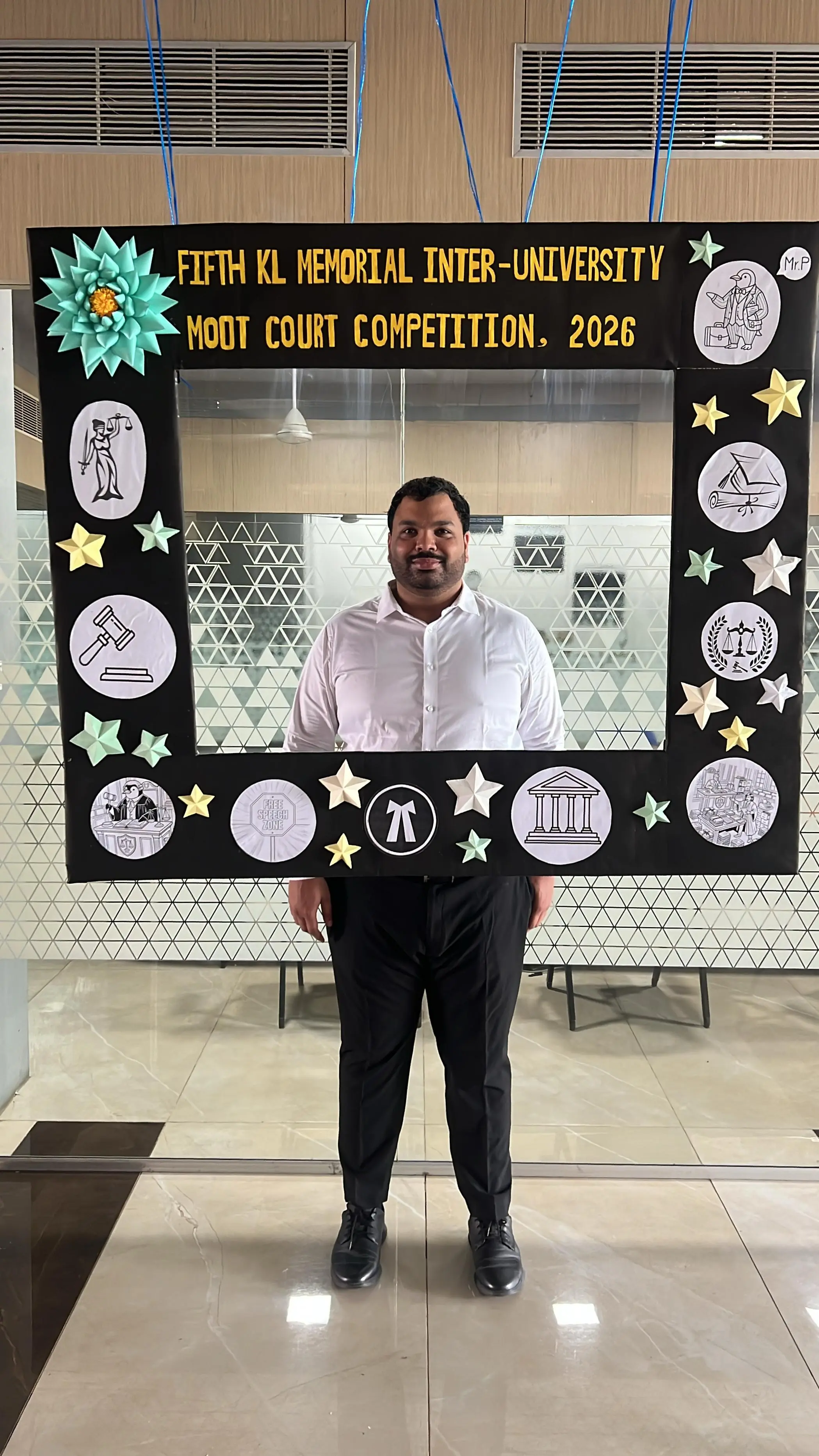
A fellow student from my LLB program at Padala Rama Reddi Law College asked me to participate in a Moot Court competition at KLU, Vijayawada. Since I knew KLU from the All India Lawyers Union (AILU) classes the previous year, it was a yes — provided I could come up with the costs. Fortunately, I found a sponsor and was able to partake in the competition without any monetary burden.
The competition was held from 3rd to 5th April 2026. You can view the moot brochure here. This is a short write-up of what I learned by participating in my first Moot Court.
What I Learned#
- Real Research Skills. Participating in a Moot teaches you genuine legal research. There are various levels of depth you must explore to uncover precedents and facts. This is not easy work — it will take you endless hours and prepare you for real-world case research. Even in the era of ChatGPT and AI, you still have to pore over countless judgments, law journal articles, government guidelines, and legislation. This is the real work of a lawyer.
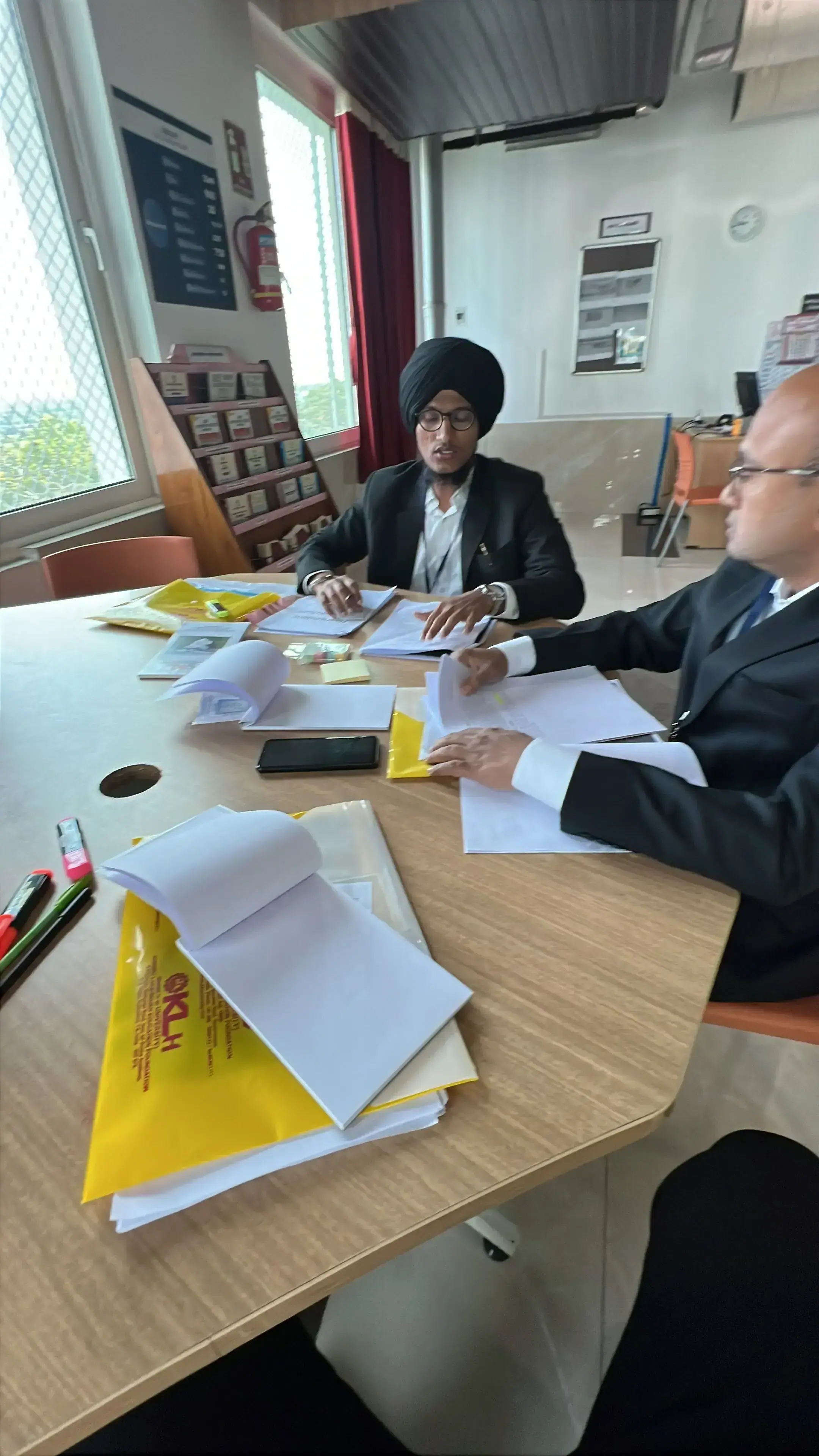
- Access to SCC Online. We got complimentary access to SCC Online for 30 days. SCC is one of India’s leading court reporters and has been around for decades. You can use it to look up any judgment from any court in India, and even a few from abroad. If you print a judgment from SCC, you can submit it in court as valid evidence. Learning how to navigate SCC Online is itself an art — it’s a skill you can highlight on your resume and stand out from 10,000 other candidates who don’t know how to use it.
Since I am a fervent believer in FOSS (Free and Open Source Software), I prefer to use e-SCR (Electronic Supreme Court Reports), which is free and maintained by the Supreme Court of India. However, e-SCR does not have High Court judgments and also lacks some Supreme Court judgments. This gap is filled by private players such as SCC Online and Manupatra.
The Citation System. This was the first time I ever used a formal citation system — Bluebook, 22nd Edition. Once you learn this citation method, you understand why it matters. Words like supra, ibid, and id. start to make sense. The real benefit: if you give good citations, judges and other advocates will actually feel like reading your pleadings, giving you a better shot at getting your view across. This is a cheat code that most people fail to use. It took me 2–3 hours just to get the citations right, but I say with conviction that this was a spectacular learning experience.
Drafting Memorials. This is perhaps the single most important task of any Moot Court competition — the moot memorials.
Since I run 1516, I know the statistics of our Telugu advocates and law students. It is unfortunate, but we face a serious dearth of good-quality advocates who can draft pleadings like prose. A big reason for this is the Telugu-medium schooling background that many students in Andhra Pradesh and Telangana come from, resulting in limited English exposure during formative years. They don’t read English much outside of school which translates into lesser exposure. With the advent of social media hyper-localisation, students are less exposed to foreign content than ever before. This is why our English standards are low.
Your pleadings are an opportunity to put your point across in a way that may not have been considered by the judge or the opposing side. You have an opportunity to present your view without interruptions. This is important. Judges DO read the case files — I learned this from internships with a couple of judges and former judges.
Coming to the point of my own drafting skills, while I have been actively writing on the internet for over 16 years, I still had my own fair share of challenges with drafting my pleadings. I took on the task of doing all the drafting for my team and it was indeed a challenge, especially since we faced a blank page. It does help to look at some other Moot memorials submitted by others that have subsequently inspired me to draft my own. While I personally felt that I did my best, it wasn’t enough to make the cut to receive any award by KLU for the memorial.
MS Word proficiency is a must for any advocate. Formatting memorials — margins, headings, page numbering, footnotes, table of contents — all of it requires you to be comfortable with Word. If you are not, start learning now. It is a non-negotiable skill.
Our team used Google Drive extensively to maintain a working draft and keep iterating, with Google Meet calls to discuss strategy and arguments. These collaboration tools were invaluable for a team working remotely before the competition.
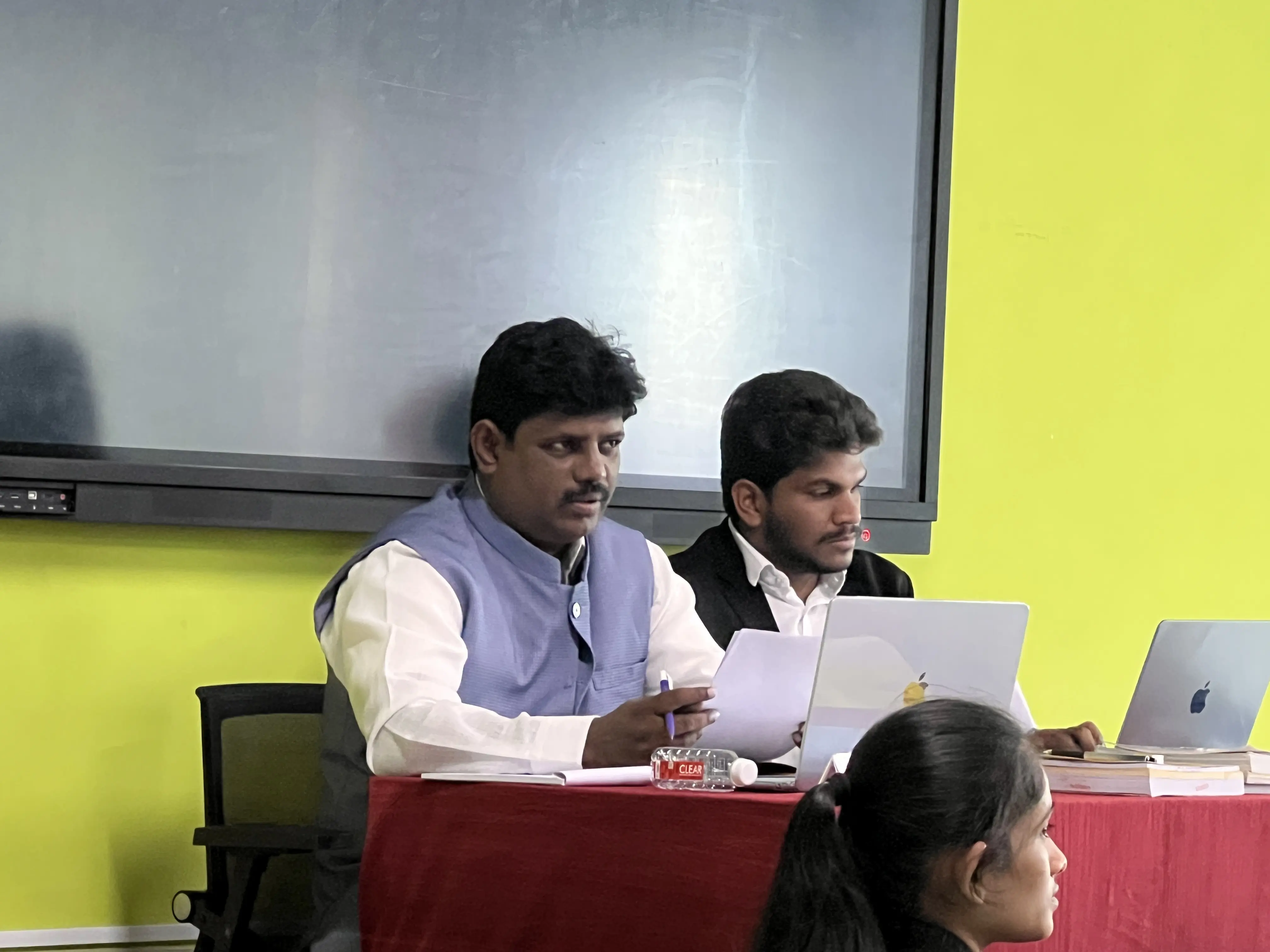
Oral Advocacy. Speaking in front of a judge is always a challenge, especially when the judge is seeing you for the first time and knows nothing about you or your credentials. Our team wasn’t as well-prepared as some of the other teams, and we felt we fared poorly in this part of the Moot — which is arguably the most important part of the competition. Having said that, there are no regrets. This was my first Moot, and our team stretched every sinew to get to where we did. It was a phenomenal learning experience, and several tools have been added to my arsenal of advocacy.
Working as a Team. A Moot Court is a team effort, and working with people who have different expectations, work styles, and levels of preparation is a challenge in itself. Not everyone approaches the competition with the same intensity, and managing that dynamic — without letting it affect the quality of your work — is a skill that extends well beyond law school. Learning to delegate, compromise, and push forward despite disagreements is part of the experience. Be sure to pick your partners after careful due diligence.
Our Result#
Let me be honest: we did not clear the preliminary rounds. Approximately half of the participating teams were eliminated after prelims, and we were among the roughly 14 teams that did not qualify for the next stage. The moot proposition was challenging, and several teams with more moot experience edged ahead.
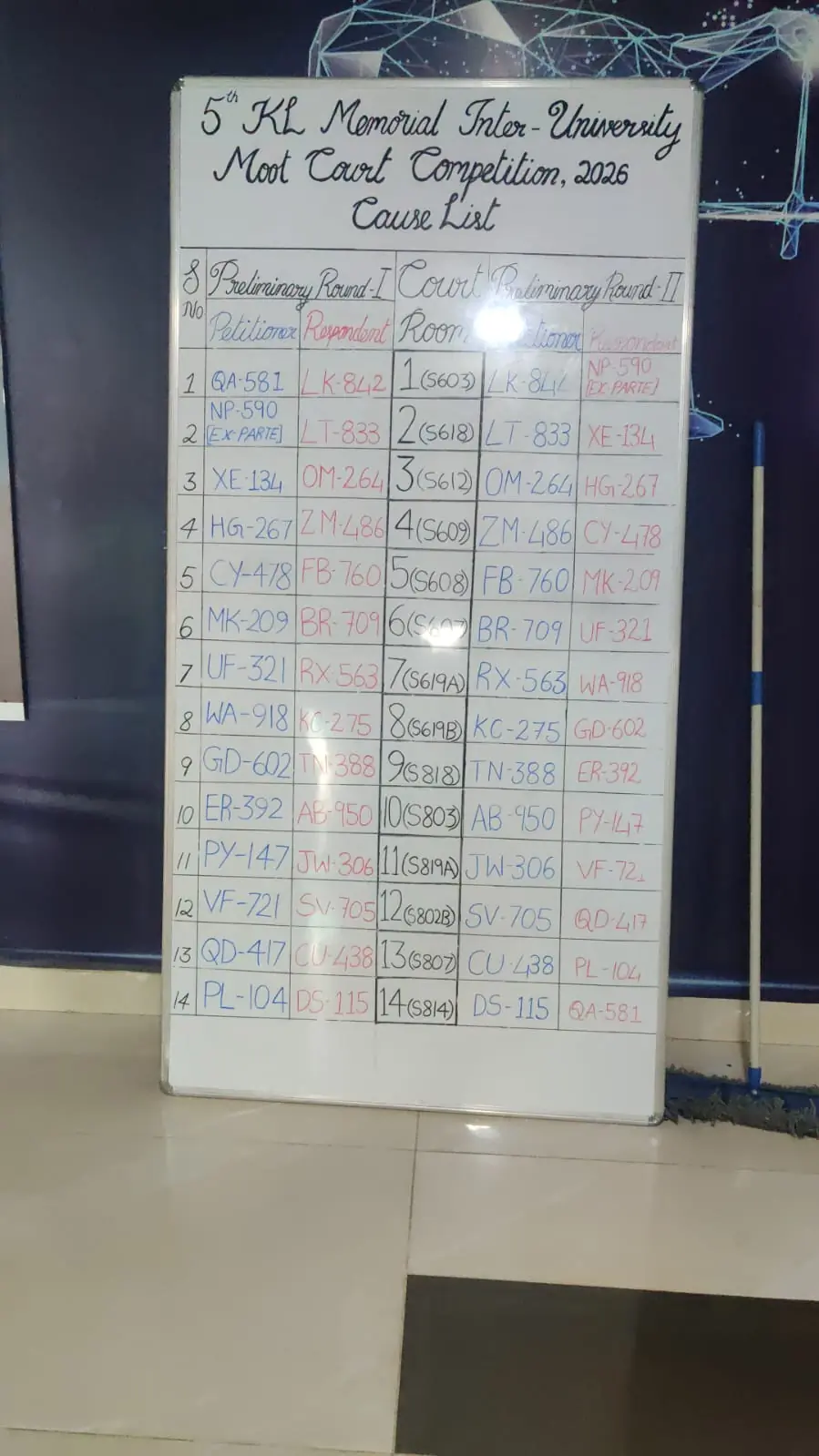
Disappointing? Not at all! I have no regrets about participating. The sheer volume of what I learned in those three days and all the preparation I put in outweighs any trophy. These are skills that are going to stay with me for life.
Experience at KLU#
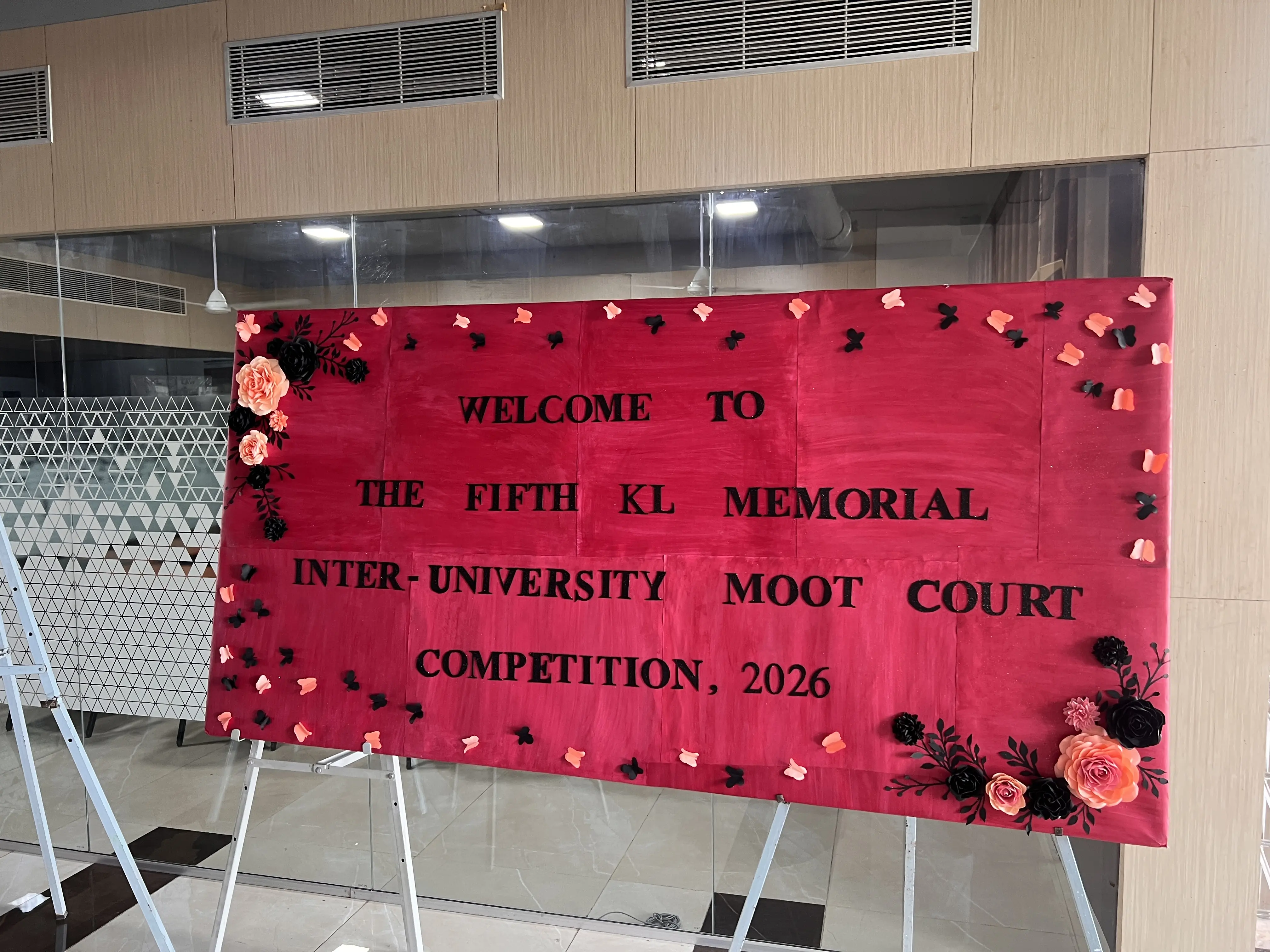
We drove down to KLU from Hyderabad, considering the April heat and the need for mobility and flexibility. From the moment we entered KLU, we were treated like royalty. A student escort was assigned at all times, and these students made sure we felt comfortable throughout. KLU has gone the extra mile for all the participants.
KLU initially proposed ₹6,000 per team for three days of accommodation and food. We felt this was steep but agreed to pay to further our legal career. However, a pleasant surprise awaited us when three days before the competition, they made the stay complimentary and charged only for food and electricity — about ₹2,500 total, which was much more reasonable.
KLU has a no-vehicle policy, which is somewhat ironic considering the Vijayawada heat, but the green cover makes up for it. The campus is lush and full of trees, making it conducive for walking. Battery-powered golf cart-type vehicles take people around, but we couldn’t ride in one due to the long wait times after booking. We chose to walk instead.
Food at KLU was simple hostel food.
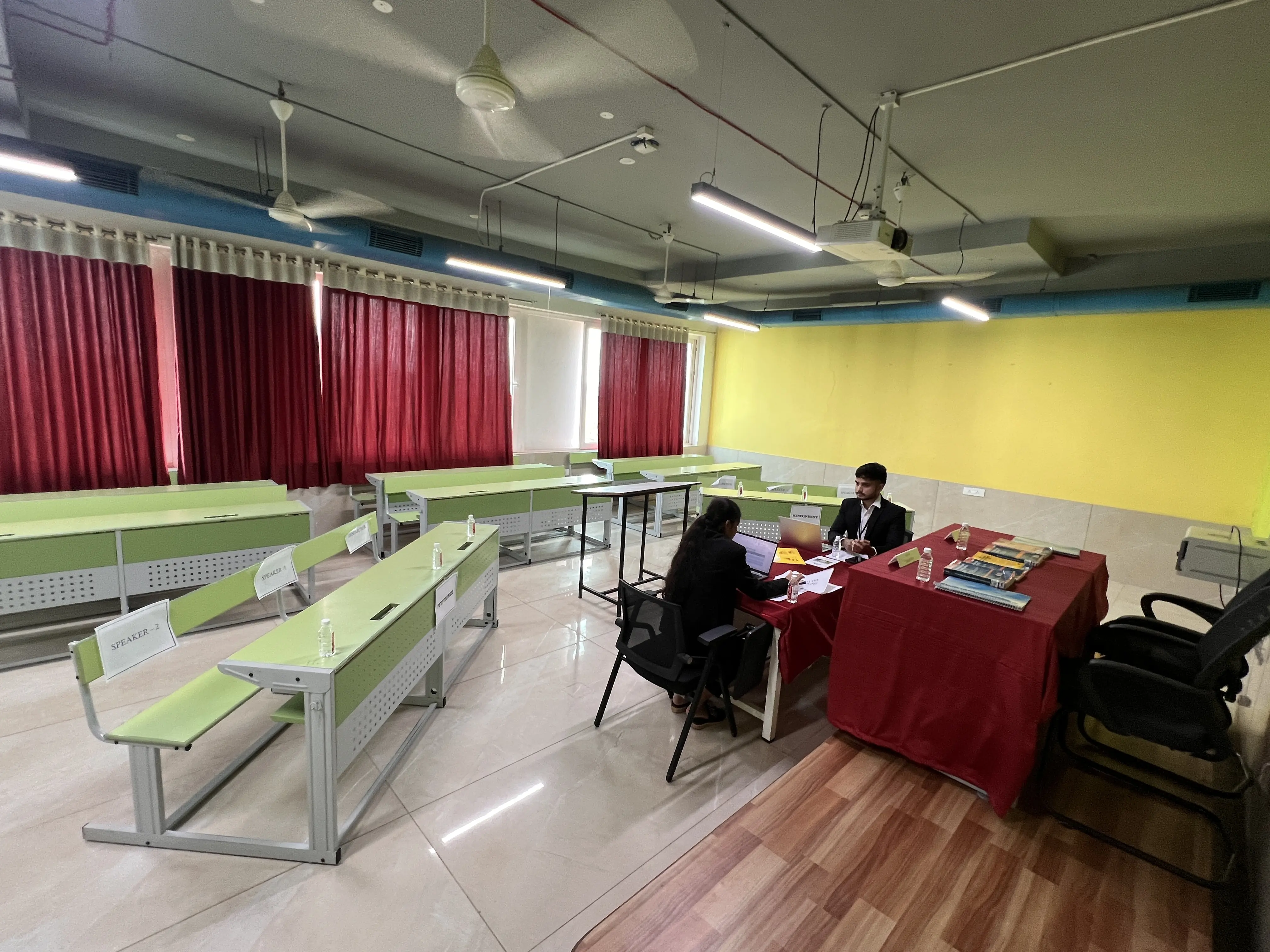
KLU has stellar law college infrastructure that provides a superior experience. The Moot Court hall is staged like an actual courtroom, and on the day of the Finals, three sitting Justices from the High Court of Andhra Pradesh presided. It looked like a real court. If you are considering a 5-year LLB, you might want to consider KL University for your law degree. I believe AP LAWCET is not mandatory for admission based on some conversations I had with the students.
The Missed Opportunity#
I am the kind of person who wants to meet people, especially in advocacy. I follow the mantra: “Your network is your net worth.” This is especially true in advocacy, where knowing other advocates can make your life infinitely better — or worse. If you are a fellow law student or a professional reading this, I am always open to connecting — feel free to add me on LinkedIn.
On this front, KLU could have done better. There was a strict confidentiality rule barring participants from revealing their college or institution name. This was irksome, as introducing yourself and exchanging contact info was not possible during the competition.
Now, I understand that the rule does serve a purpose. It prevents institutional bias — if judges know a team is from an NLU versus a rural law college, there’s an implicit and often unconscious bias. Many other moots have similar rules for exactly this reason. So the rule during the competition makes sense.
But here is the missed opportunity. KLU conducted a massive event that attracted participants from far-flung places across the country — people who flew, took trains, or drove to Vijayawada. They invested heavily to be there. After the preliminary rounds, when roughly half the teams had already been eliminated and the competition was effectively over for them, KLU missed a golden chance to conduct a networking session or an informal gathering. If participants had made 100 friends, added people on LinkedIn, exchanged WhatsApp numbers, and continued to see each other’s updates, that would have kept relationships going for years. I know this because this is exactly what happened to me at past events.
My suggestion: keep confidentiality during the competition for fairness, but arrange a post-competition networking session where participants can freely exchange contacts, add each other to their respective Rolodexes (an old device that stores contact information), and build relationships that outlast the competition.
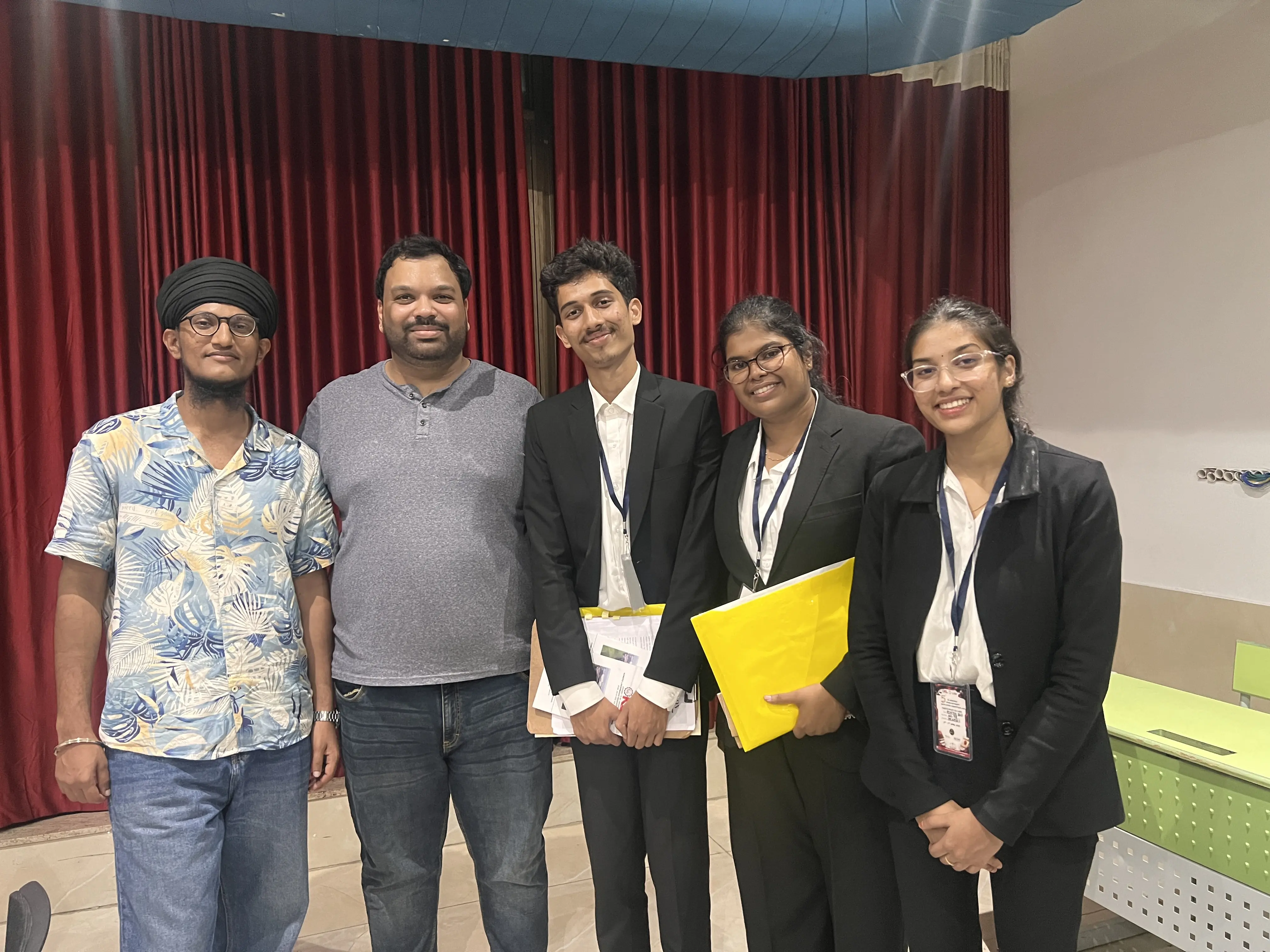
Fortunately, after we learned that the competition was over for us, I at least reached out to all the opposing teams my team competed against and exchanged credentials. I am proud to say that the team we competed against in the opening round went on to win the entire competition. They are good friends now! Here is a picture.
The Gender Policing Incident#
At around 9 PM on Friday — the day before the competition — we were asked if we would be willing to move to another building. The reason: some university official had seen multi-gender teams entering each other’s rooms and was apparently “upset,” asking the organisers to relocate the male participants.
As a matter of principle, I protest any such action of gender policing, especially in a law college. We are in 2026, and policing consenting adults is a strict no-no, even in Guntur District, AP.
Apart from the principle, we were disappointed and frustrated because when they approached us after 9pm, we were neck deep into research and strategy and poring over the opposing team’s memorials which were handed over to us earlier that day, we could not take all of our luggage and our research material (which was spread across our room) to another place. We politely declined their request citing the friction involved. The organisers did not mention anything again so I believe they figured out some other way.
The Cost of Participation#
One thing worth acknowledging: participating in a Moot Court is not equally accessible. Between registration fees, travel costs, accommodation, food, and the time away from work or college, the expenses add up quickly. Many law students simply cannot afford to participate. The prestige economy around moots (CV points, certificates, LinkedIn posts) disproportionately benefits students from well-resourced colleges or those from well-off backgrounds who can attend multiple competitions a year. This is a reality that organisers, colleges, and sponsors should actively work to address.
Here is what our team of 3 actually spent, tracked using Splitwise. We could have taken a train or bus, but since we did not know if we would qualify beyond the first round, we chose to drive from Hyderabad to keep our options open.
| Expense | Amount |
|---|---|
| Fuel (Diesel — Hyderabad ↔ Vijayawada) | ₹3,613.63 |
| Tolls (Onward + Return) | ₹820.00 |
| Accommodation — Food & Electricity (3 nights) | ₹2,500.00 |
| Registration & Speed Post | ₹1,606.00 |
| Printing & Xerox (Memorials, Compendium, Proposition) | ₹747.00 |
| Miscellaneous (Stationery, Soap) | ₹125.00 |
| Grand Total | ₹9,411.63 |
| Per Head (3 members) | ₹3,137.21 |
If You Are a Law Student Reading This#
Here are a few tips and learnings:
Moot Court is not real court. Real judges have been trained and appointed through a rigorous process. Judges in Moots are advocates who volunteered their time on a Saturday. The standards, expectations, and dynamics are different.
Moot propositions are hypothetical. As a practising advocate, you will handle cheque bounce cases, bail applications, intellectual property disputes, and contractual matters among many others. How often will you get a case involving genetic data of a child born through gestational surrogacy? For 99% of advocates, the likelihood is close to zero — effectively never. These issues are typically dealt with at Constitutional Courts. However, all the advocates I have spoken to to date say the same thing — if you don’t start practice at District judiciary, you will never have a strong foundation.
Participating in a Moot will do things to you that transforms your life. For this competition alone, over 20 full judgments were read — including 3 foreign ones. The experience taught me how to study a case, how others study the same case, who takes content from Google and who takes it from books. Watching how different judges think and seeing how they allow or dismiss arguments was eye-opening. A case can have several facets, and advocates must be ready to argue both sides — attachment to one position is a luxury you cannot afford.
Finding a sponsor. If you are a law student who cannot afford the expenses of a Moot Court, find a sponsor. Sometimes your college might sponsor you. Sometimes it might be someone you interned with. For me, it was someone I had done RTI drafting work for — he sponsored my share of the competition. Put your mind to good use and try to reduce expenditure at every step.
Final Thoughts#
My first Moot Court did not end with a trophy. We didn’t clear prelims, the memorial didn’t win an award, and our oral advocacy needed work. But none of that matters. What matters is that in three days at KLU, I learned more about legal research, drafting, citation, and courtroom presence than several months of classroom lectures had taught me. The experience has sharpened my thinking, expanded my network, and given me a concrete benchmark for where I stand and where I need to go.
If you’re on the fence about participating in a Moot — stop thinking and sign up. The worst that happens is you learn something.
Acknowledgements#
This experience would not have been possible without the people who made it happen. A heartfelt thank you to:
- Ashritha — Organiser of the KLU Moot Court Competition, who ensured the event ran seamlessly from start to finish.
- Aarshil - The first point of contact for our team who made the first call letting us know about the Moot competition.
- Afrid — Volunteer, who was always available and kept things moving behind the scenes.
- Prof. Mudasser — Faculty Organiser, whose guidance and vision brought the competition to life.
- Neha, Nimisha, Rohitha, and Pruthvi — Volunteers who went the extra mile to make our team feel welcome and comfortable.
- Kushal, Nandini & Rohitaa from Siddhartha Law College — the winning team and now good friends. Your smiles are infectious!! :)
And to the many others whose names I may not recollect but whose efforts I deeply appreciate — the student escorts, the registration desk volunteers, the people who arranged rooms and food, and everyone who worked tirelessly to make this competition a reality. Thank you.
Quick Links
Prithvi Raj Kunapareddi
Founder, 1516
Connect with me on LinkedIn